Polar Design System,
Polar Design System,
Eskimoz
Eskimoz
SCALE UP, 17M RAISED
ADTECH, DIGITAL MARKETING
Overview
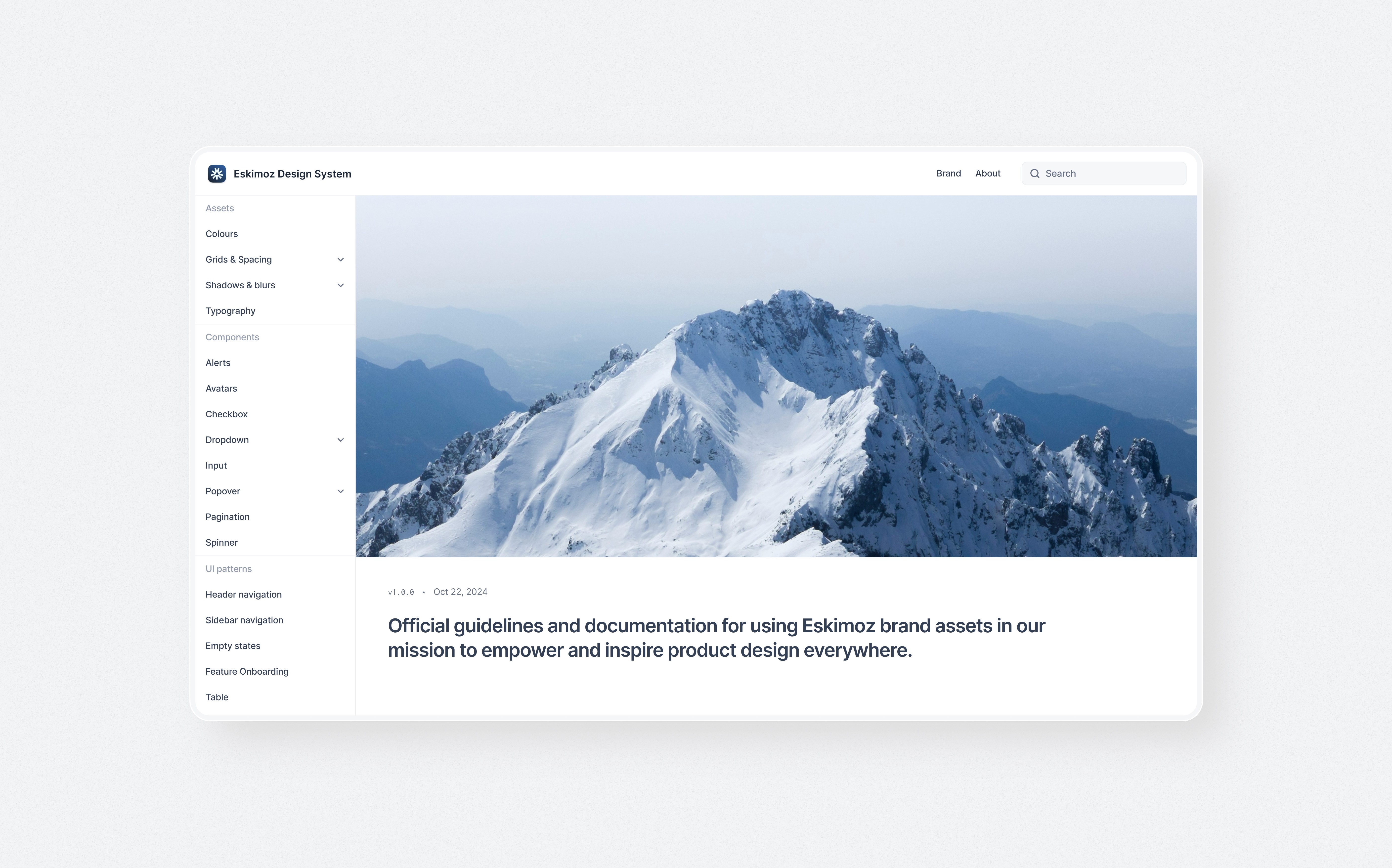
Eskimoz was entering a new stage of growth, backed by €17M in funding, but the product experience no longer reflected the maturity of the business or the sophistication of its SEO and SEA tooling. My role was not simply to refresh the interface, but to create a stronger foundation for scale by designing Polar, a modular design system that could bring consistency to the product, improve usability, and support faster collaboration between design and engineering.
Research
To understand where the friction was coming from, I approached the project as both a product and systems challenge rather than just a UI task. I audited the existing experience and mapped recurring interaction patterns across the platform to pinpoint exactly where users and internal teams were getting blocked.
Challenges
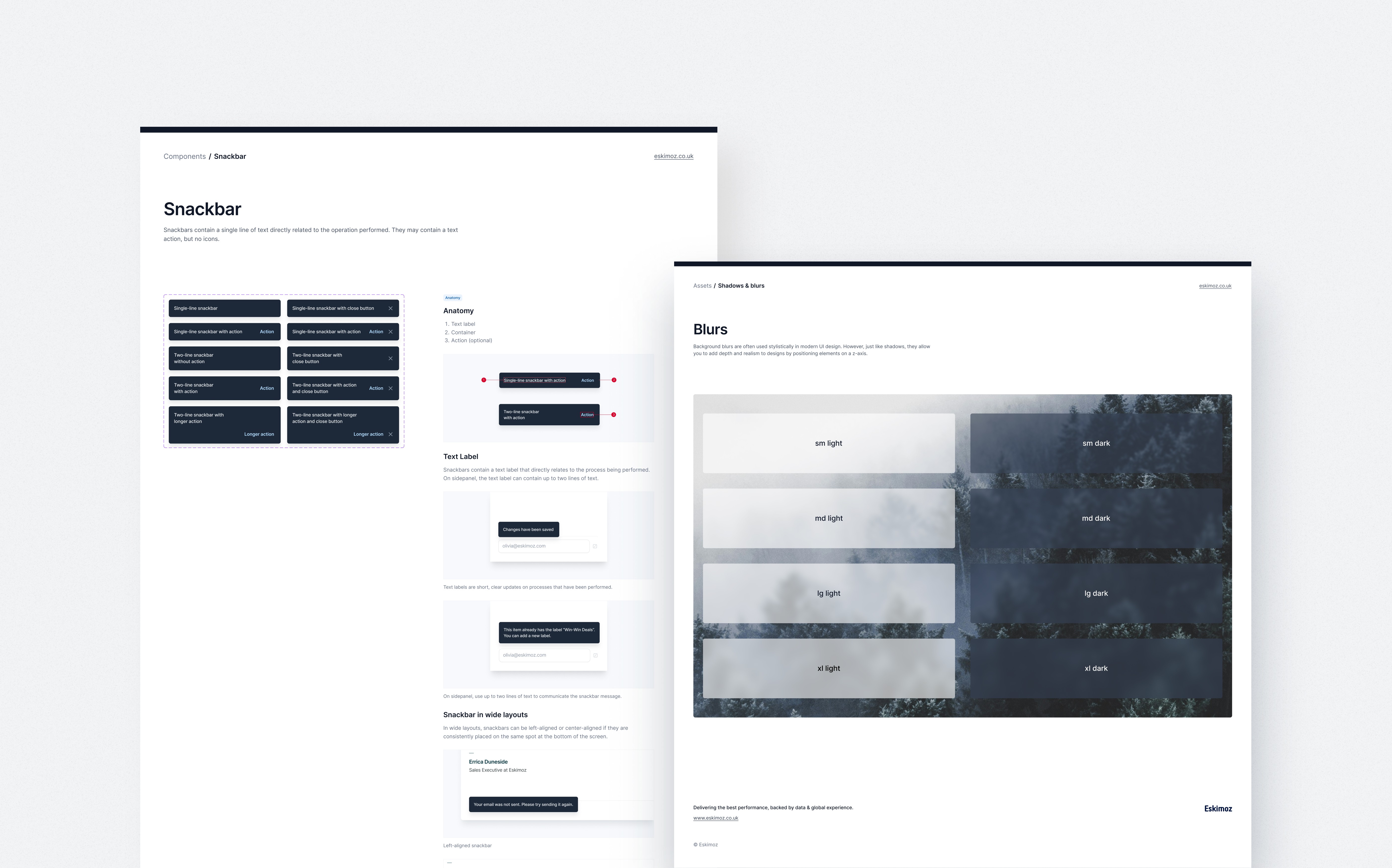
The core issue was that the interface had expanded organically over time without a clear system, creating a fragmented experience that made complex SEO and SEA workflows difficult to navigate. This lack of a shared design language was not only increasing cognitive load for the users but was also severely slowing down engineering delivery and multiplying UI-related technical debt.
Key Solutions
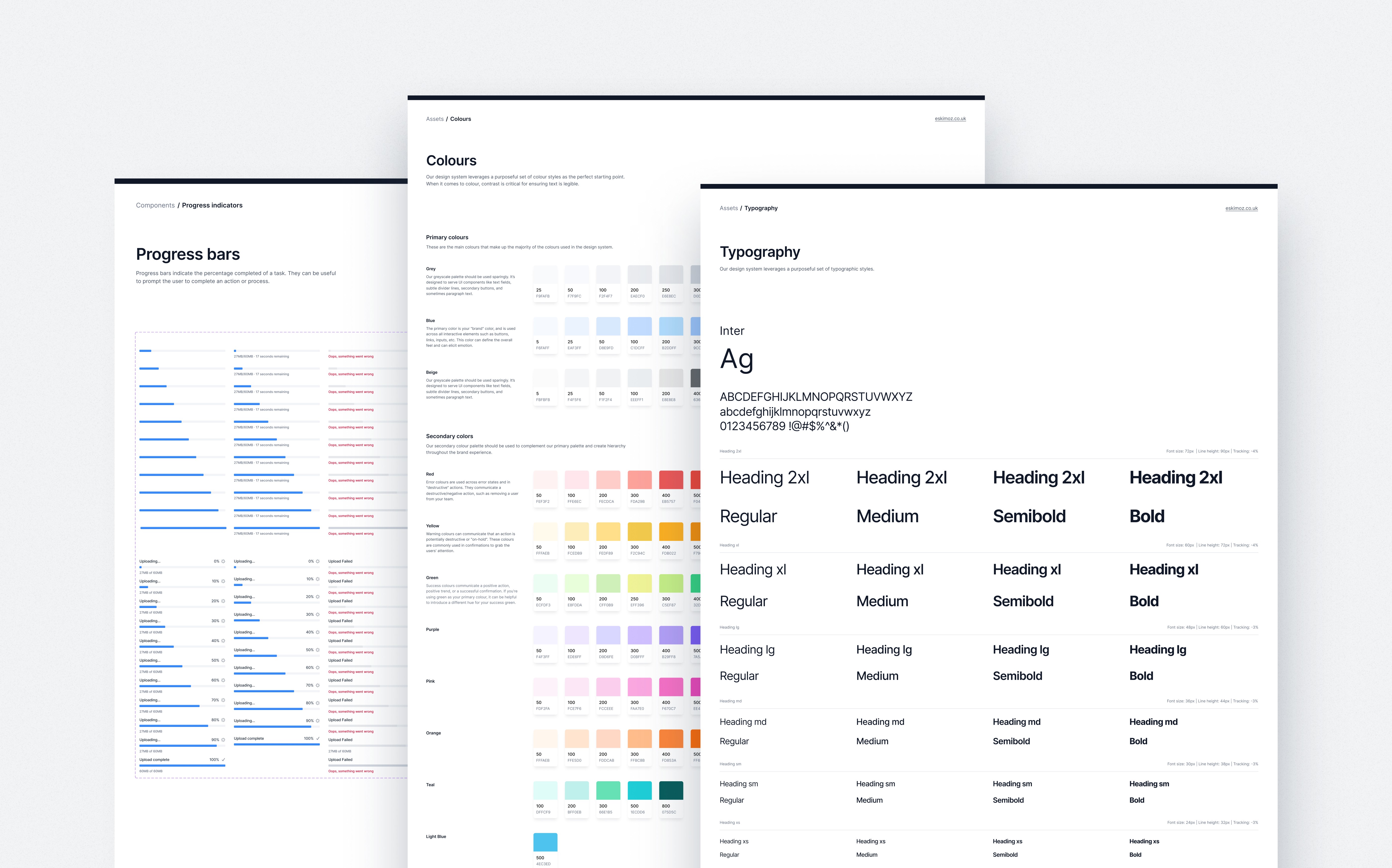
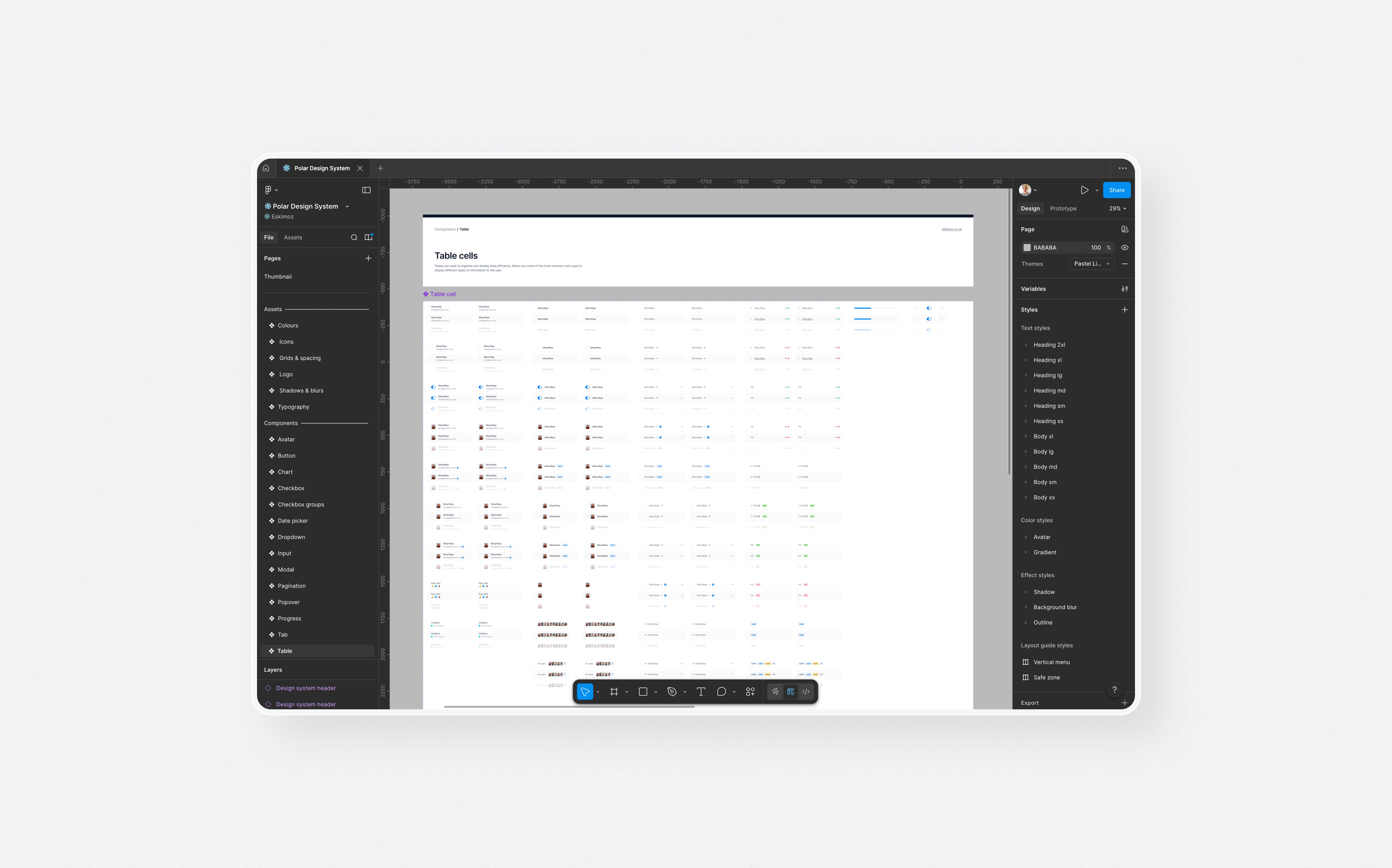
I took full ownership of the strategic direction by architecting Polar, a modular design system built to bring consistency, clarity, and flexibility to the entire platform. Rather than treating the work as a one-off redesign, I focused on creating a unified visual language with reusable, reliable building blocks. This approach gave engineers a highly efficient framework for building at scale while helping users process dense data much more intuitively.
Impact
The implementation of the Polar system produced measurable operational gains.
Feature delivery 55% faster, UI-related bugs decreased by 30%, and user satisfaction improved by 40%.
Beyond immediate delivery, the system severely reduced technical debt and dropped engineering onboarding time, allowing new hires to ship production-ready UI in their first week. Ultimately, this initiative repositioned design from a simple layer of polish into a strategic asset that actively supported Eskimoz’s scaling efforts.
Polar Design System,
Polar Design System,
Eskimoz
Eskimoz
SCALE UP, 17M RAISED
ADTECH, DIGITAL MARKETING
Overview
Eskimoz was entering a new stage of growth, backed by €17M in funding, but the product experience no longer reflected the maturity of the business or the sophistication of its SEO and SEA tooling. My role was not simply to refresh the interface, but to create a stronger foundation for scale by designing Polar, a modular design system that could bring consistency to the product, improve usability, and support faster collaboration between design and engineering.
Research
To understand where the friction was coming from, I approached the project as both a product and systems challenge rather than just a UI task. I audited the existing experience and mapped recurring interaction patterns across the platform to pinpoint exactly where users and internal teams were getting blocked.
Challenges
The core issue was that the interface had expanded organically over time without a clear system, creating a fragmented experience that made complex SEO and SEA workflows difficult to navigate. This lack of a shared design language was not only increasing cognitive load for the users but was also severely slowing down engineering delivery and multiplying UI-related technical debt.
Key Solutions
I took full ownership of the strategic direction by architecting Polar, a modular design system built to bring consistency, clarity, and flexibility to the entire platform. Rather than treating the work as a one-off redesign, I focused on creating a unified visual language with reusable, reliable building blocks. This approach gave engineers a highly efficient framework for building at scale while helping users process dense data much more intuitively.
Impact
The implementation of the Polar system produced measurable operational gains.
Feature delivery 55% faster, UI-related bugs decreased by 30%, and user satisfaction improved by 40%.
Beyond immediate delivery, the system severely reduced technical debt and dropped engineering onboarding time, allowing new hires to ship production-ready UI in their first week. Ultimately, this initiative repositioned design from a simple layer of polish into a strategic asset that actively supported Eskimoz’s scaling efforts.