Eskimoz
Unified OS for digital marketing consultants
Unified OS for digital marketing consultants
AI-driven analytics platform used by 400+ companies including L'Oréal, Sandro, and PwC across 5 European markets. Led the redesign of the core web app and built the company's Google Analytics alternative. Brought consultants back from competitor tools by redesigning 8 product surfaces into one unified platform. Leak rate dropped to under 2%. The app received 2x Les Cas d'Or Gold and 5x European Search Award nominations.
AI-driven analytics platform used by 400+ companies including L'Oréal, Sandro, and PwC across 5 European markets. Led the redesign of the core web app and built the company's Google Analytics alternative. Brought consultants back from competitor tools by redesigning 8 product surfaces into one unified platform. Leak rate dropped to under 2%. The app received 2x Les Cas d'Or Gold and 5x European Search Award nominations.
AI-driven analytics platform used by 400+ companies including L'Oréal, Sandro, and PwC across 5 European markets. Led the redesign of the core web app and built the company's Google Analytics alternative. Brought consultants back from competitor tools by redesigning 8 product surfaces into one unified platform. Leak rate dropped to under 2%. The app received 2x Les Cas d'Or Gold and 5x European Search Award nominations.



Leaking to competitors
Leaking to competitors
Many consultants were avoiding the internal platform and relying on external tools instead. Around 15% of potential usage was leaking to competitors, costing the business significant revenue.
Many consultants were avoiding the internal platform and relying on external tools instead. Around 15% of potential usage was leaking to competitors, costing the business significant revenue.
Working with a small group of engineers, product managers, and data analysts, the focus was designing a new web app and first design system that consultants would actually trust and choose to use in their day-to-day work.
Working with a small group of engineers, product managers, and data analysts, the focus was designing a new web app and first design system that consultants would actually trust and choose to use in their day-to-day work.
Why they preferred other tools
Why they preferred other tools
Spent time with consultants across France, Germany, Italy, and the UK to understand the resistance. The feedback was consistent. The existing interface felt dated and overloaded.
Spent time with consultants across France, Germany, Italy, and the UK to understand the resistance. The feedback was consistent. The existing interface felt dated and overloaded.
Consultants were spending too much time acting as human integrators, manually stitching together spreadsheets and platforms. There was anxiety around tracking billable hours accurately. Performance bonuses depended on proving impact, yet the old system offered very little visibility into how their work translated into results. This wasn't a design problem. It was a trust problem.
Consultants were spending too much time acting as human integrators, manually stitching together spreadsheets and platforms. There was anxiety around tracking billable hours accurately. Performance bonuses depended on proving impact, yet the old system offered very little visibility into how their work translated into results. This wasn't a design problem. It was a trust problem.

Legacy Eskimoz interface showing fragmented tools and dated visual language

Competitive analysis dashboard showing performance gaps and ranking trends
The vision
The vision
The goal wasn't incremental improvement. It was repositioning Eskimoz as a credible and modern alternative to Google Analytics with an ease of use.
The goal wasn't incremental improvement. It was repositioning Eskimoz as a credible and modern alternative to Google Analytics with an ease of use.
Google Analytics offered depth but overwhelmed users. Competing platforms felt dated. Consultants needed something powerful enough for enterprise clients yet simple enough to trust without a manual. This meant rejecting the industry pattern of cramming features into dense dashboards. Instead, the platform needed clear information hierarchy, progressive disclosure, and workflows that guided consultants to insights rather than burying them in options. The technical challenge was replacing a fragmented ecosystem of third-party tools with a unified foundation whilst under pressure to ship. Investing three months in architecture and design system before features was a hard sell during growth targets, but necessary to earn trust.
Google Analytics offered depth but overwhelmed users. Competing platforms felt dated. Consultants needed something powerful enough for enterprise clients yet simple enough to trust without a manual. This meant rejecting the industry pattern of cramming features into dense dashboards. Instead, the platform needed clear information hierarchy, progressive disclosure, and workflows that guided consultants to insights rather than burying them in options. The technical challenge was replacing a fragmented ecosystem of third-party tools with a unified foundation whilst under pressure to ship. Investing three months in architecture and design system before features was a hard sell during growth targets, but necessary to earn trust.
Building the foundation first
Building the foundation first
Over the first months, I focused on building a robust design system as the base layer for everything else.
Over the first months, I focused on building a robust design system as the base layer for everything else.
With that in place, reshaped the information architecture so client work and consultant workflows were clearly separated. Made it easier to switch between managing accounts and managing one's own pipeline. To address stress around time tracking, designed an automated timer that quietly captured work hours in the background. Tied into a transparent performance and health score view. Consultants could see, in real time, how their activity translated into metrics and bonuses. No extra admin required.
With that in place, reshaped the information architecture so client work and consultant workflows were clearly separated. Made it easier to switch between managing accounts and managing one's own pipeline. To address stress around time tracking, designed an automated timer that quietly captured work hours in the background. Tied into a transparent performance and health score view. Consultants could see, in real time, how their activity translated into metrics and bonuses. No extra admin required.
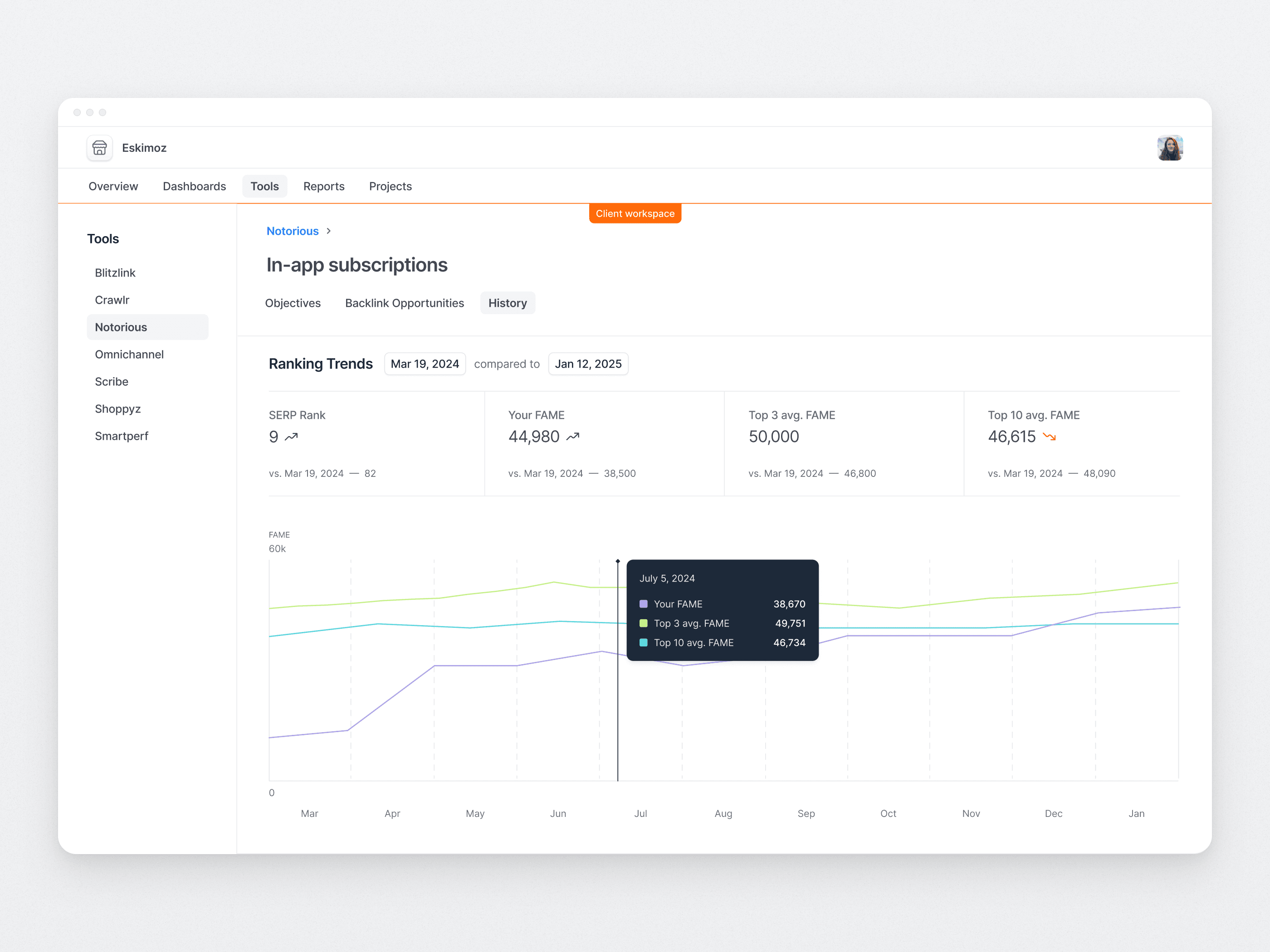
Ranking trends over time with competitor comparison and historical data
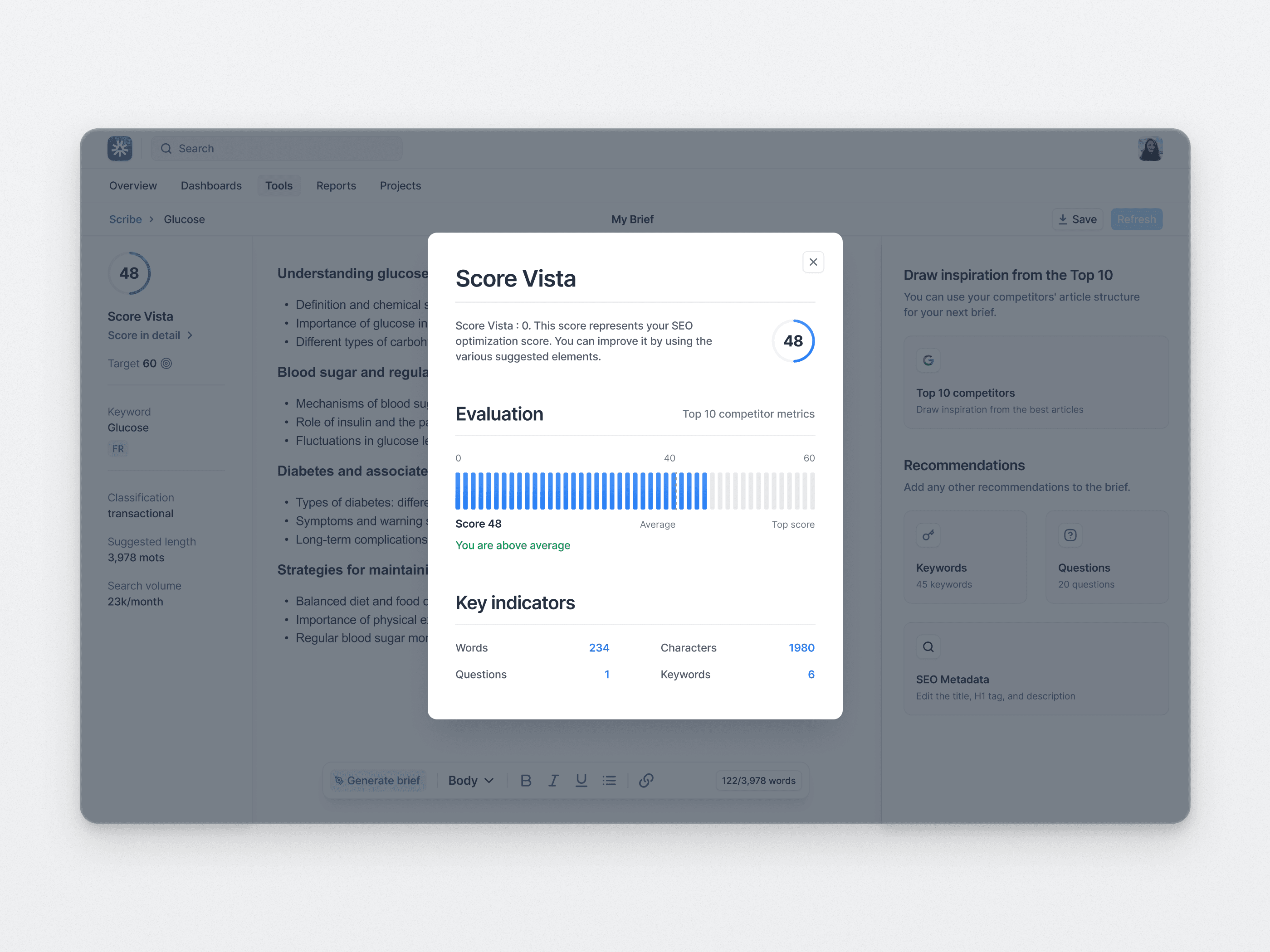

Strategy distribution modal showing metric weightings before applying changes
From resistance to adoption
From resistance to adoption
The new platform changed how consultants interacted with Eskimoz tooling. Adoption grew significantly.
The new platform changed how consultants interacted with Eskimoz tooling. Adoption grew significantly.
Daily reporting time dropped from approximately one hour to ten minutes, freeing up more time for actual client work. Over the following months, this helped secure tens of thousands of billable hours that had previously been at risk.
Daily reporting time dropped from approximately one hour to ten minutes, freeing up more time for actual client work. Over the following months, this helped secure tens of thousands of billable hours that had previously been at risk.
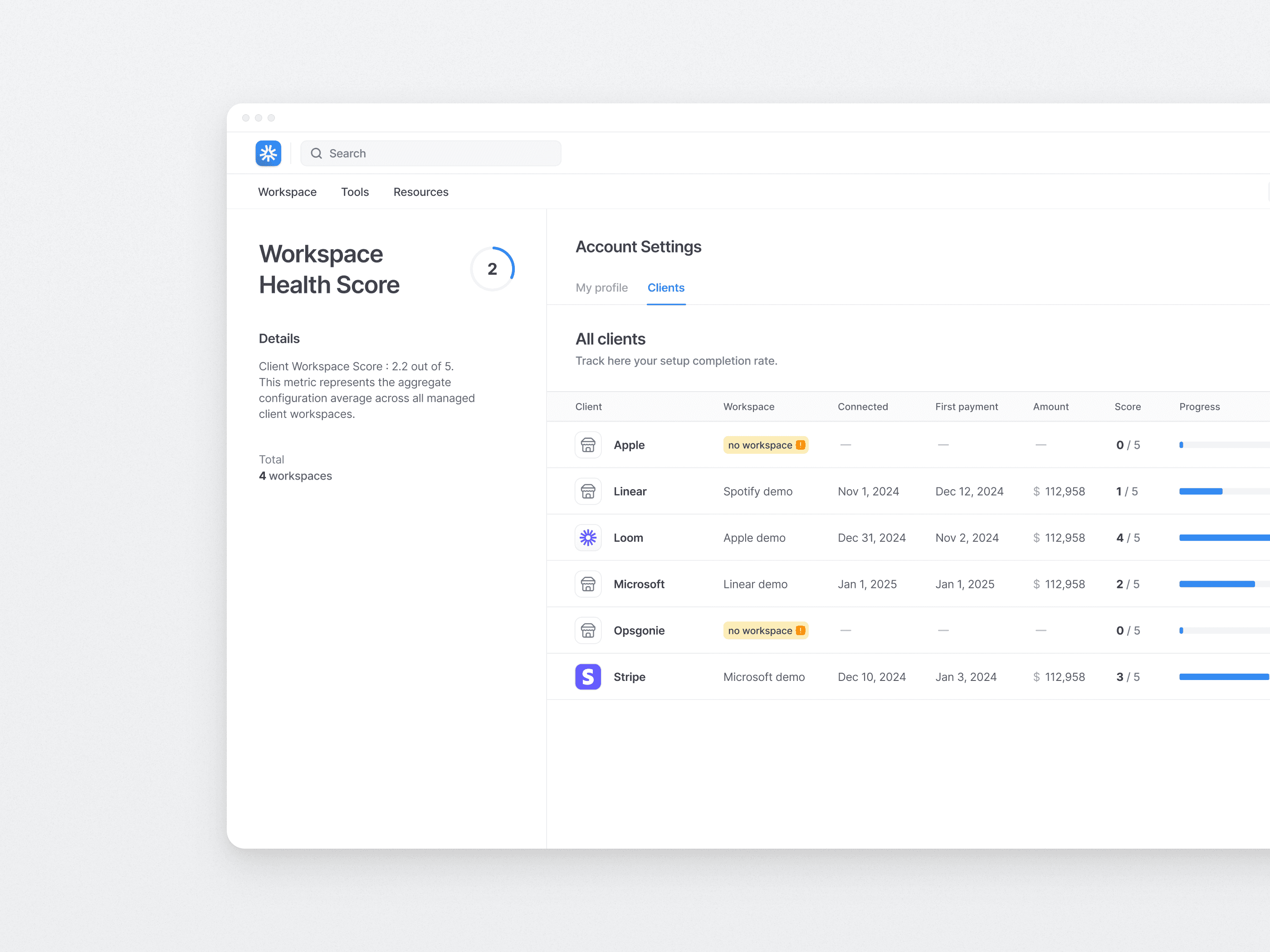
Time tracking for managers (team capacity) and consultants (individual progress and timesheets)
Awards
Awards
The app received recognition
The app received recognition
The app received recognition from Les Cas d'Or and the European Search Awards for its innovative approach to search software and platform optimisation.
The app received recognition from Les Cas d'Or and the European Search Awards for its innovative approach to search software and platform optimisation.